
Skills for the Fourth Industrial Revolution: Analytical Thinking, Creative Thinking, and Systems Thinking
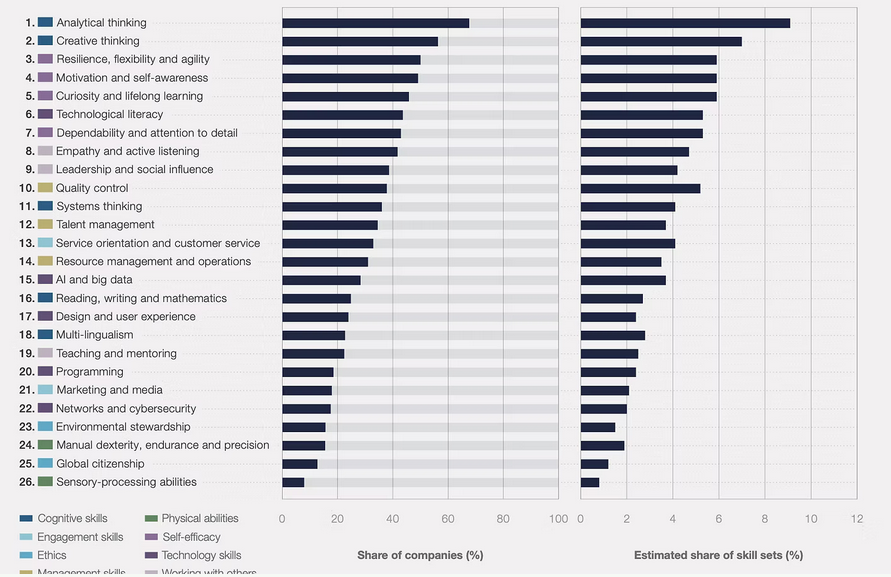
The future of work report by the World Economic Forum shows the skills required for the 4th Industrial Revolution.
In today's rapidly evolving business landscape, driven by technological advancements and shifting market demands, developing essential skills like analytical thinking, creative thinking, and systems thinking has become crucial for both individuals and organizations. Here's why investing in these areas is essential:
1. Adaptation to Technological Changes
Keeping Pace with Innovation: As new technologies emerge, the ability to analyze, think creatively, and understand complex systems ensures that employees stay current with the latest tools, platforms, and processes, maintaining their relevance in the job market.
Enhanced Productivity: Employees equipped with these advanced thinking skills can leverage new technologies more effectively, leading to increased efficiency and productivity within the organization.
2. Meeting Market Demands
Responding to Industry Shifts: Market dynamics and customer preferences are continually changing. Developing analytical, creative, and systems thinking enables organizations to pivot and meet these new demands swiftly, maintaining their competitive edge.
Customization and Personalization: Employees with enhanced thinking skills can better understand and cater to specific customer needs, delivering personalized solutions and improving customer satisfaction.
3. Boosting Employee Morale and Retention
Career Growth Opportunities: Offering programs to develop these essential thinking skills demonstrates a commitment to employee development, fostering a culture of continuous learning and growth. This leads to higher job satisfaction and loyalty.
Employee Engagement: Engaged employees are more productive and motivated. Providing opportunities for learning and advancement keeps employees invested in their roles and the organization's success.
4. Fostering Innovation
Encouraging Creativity: Employees with strong analytical and creative thinking skills are more likely to think innovatively. This drives the development of new products, services, and solutions that can differentiate the organization in the marketplace.
Cross-Disciplinary Collaboration: Systems thinking often involves understanding how different domains interact. This interdisciplinary knowledge promotes collaboration and the exchange of ideas, leading to innovative outcomes.
5. Enhancing Organizational Agility
Flexibility and Adaptability: A workforce that is continually learning and evolving its thinking skills is better equipped to handle changes and disruptions. This agility is crucial for responding to unexpected challenges and capitalizing on new opportunities.
Scalability: Organizations with a culture of continuous learning can scale their operations more effectively, as they can quickly train employees to take on new roles and responsibilities as needed.
6. Closing Skills Gaps
Addressing Talent Shortages: Many industries face significant skills gaps that hinder growth and innovation. Developing analytical, creative, and systems thinking skills in existing employees can bridge these gaps, ensuring that the organization has the talent it needs to succeed.
Future-Proofing the Workforce: By anticipating future skills requirements and proactively training employees, organizations can prepare for upcoming industry trends and technological advancements.
7. Economic Growth and Competitiveness
Driving Economic Development: A workforce skilled in analytical, creative, and systems thinking contributes to higher productivity, innovation, and economic growth. This benefits not only individual organizations but also the broader economy.
Global Competitiveness: In a globalized market, having a workforce with advanced and diverse thinking skills is essential for competing internationally. These skills ensure that organizations can meet global standards and capitalize on international opportunities.
Conclusion
Investing in the development of analytical thinking, creative thinking, and systems thinking is not just beneficial but essential in today's fast-paced, technology-driven world. These skills empower employees to stay relevant, foster innovation, and enhance organizational agility, driving sustained success and growth. By focusing on continuous learning and development, organizations can build a resilient and future-ready workforce capable of navigating the complexities of the modern business environment.
Ready to empower your workforce with these essential skills? Contact us at Apex to learn how we can help your organization thrive in the Fourth Industrial Revolution.
The Skills Your Workforce Needs for the Future
The World Economic Forum’s Future of Work Report makes it clear: success in the Fourth Industrial Revolution depends on more than just technology — it requires new ways of thinking.
At Apex Strategy 4.0, we help organizations and individuals build the three most essential skills for the digital age:
Analytical Thinking – making sense of data and complexity
Creative Thinking – solving problems with innovation and originality
Systems Thinking – seeing how everything connects and creating smarter solutions
Why These Skills Matter
Stay Ahead of Technology
Equip your team to adapt to rapid innovation, leverage new tools effectively, and remain relevant in a constantly changing market.
Drive Productivity & Growth
Employees trained in advanced thinking skills are more efficient, adaptable, and capable of boosting your organization’s performance.
Meet Shifting Market Demands
From customer expectations to industry disruptions, your workforce will have the agility to pivot and deliver personalized, impactful solutions.
Foster Innovation & Collaboration
By combining analytical insight with creativity and systems-level awareness, your team will generate new products, services, and ideas that stand out in the marketplace.
Future-Proof Your Workforce
Close today’s skills gaps and prepare for tomorrow’s opportunities by investing in continuous learning and development.
Organizations that build these skills are more innovative, competitive, and resilient — ready to thrive in local markets and on the global stage.
At Apex Strategy 4.0, we design tailored training programs, backed by accredited partners, to help your team adapt, innovate, and lead in the Fourth Industrial Revolution.